
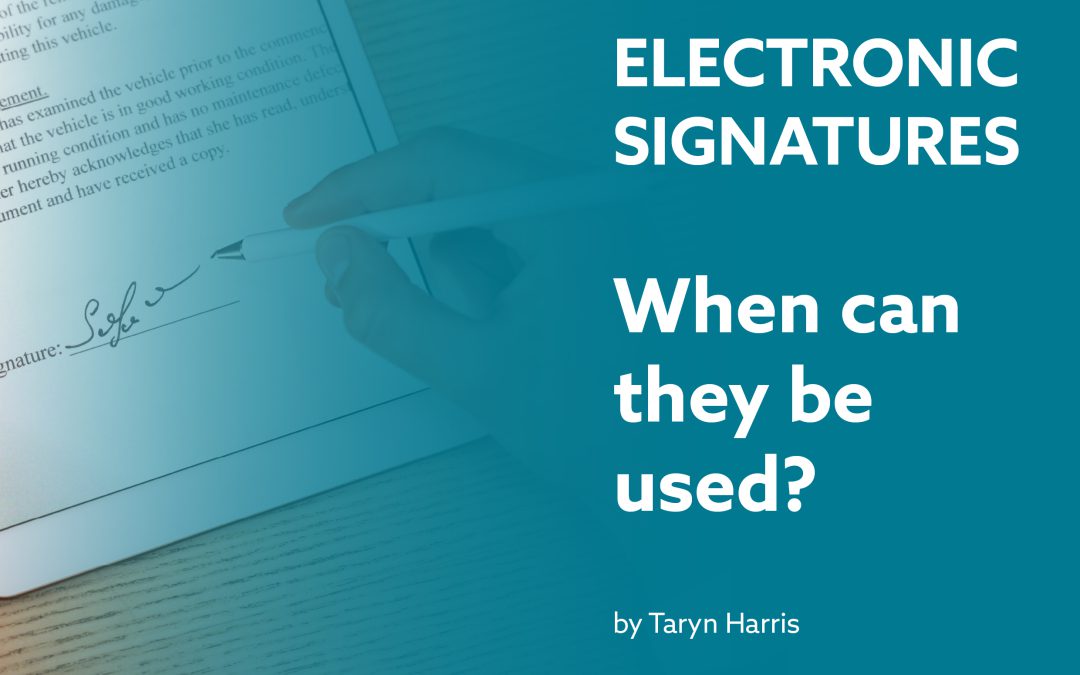
Electronic Signatures - When can they be used?
There seems to be a lot of uncertainty surrounding when an electronic signature can be used. In light of the various stages of lock-down and social distancing, this may be a very important method of signing agreements.
There are four types of electronic signatures: a soft copy of a person’s traditional wet-ink signature; the electronic format (usually found at the bottom of an e-mail); an “I accept” tick box and the use of an e-pen / finger on a tablet.
In South Africa, as a general rule, an electronic signature may be used to sign any agreement, unless there is a law prohibiting the use of such a signature.
An electronic signature may not be used to sign a Will or a codicil, a long term lease (which is any lease longer than 10 years – or a lease for a fixed period of time, which together with any renewal period is 10 years or longer), for the alienation of immovable property and for a bill of exchange (such as a cheque).
Even if it is agreed that an electronic signature may be used, it will only be considered binding if a person can use a mechanism to identify the person and can prove that the person who used their electronic signature approved the use of their signature. In addition, it is vital to consider all the relevant circumstances surrounding when the electronic signature was used to determine whether it was appropriate to use an electronic signature at the time.
It is important to note that not all parties have to sign using an electronic signature. A traditional wet-ink signature may be used and either counter-signed with an electronic signature or visa versa.
Be sure your agreement is valid when using an electronic signature by adhering to the above.

Taryn Harris
Partner & Co-Founder at Harris Marcus Mahlangu | Attorney | Conveyancer | Notary | Specialist in real estate transactions, property development strategy and notarial practice